Subtle Design Nuances That Shape Enduring Player Commitment in Connected Gaming Worlds
Parker Frank · Oct 21, 2026

Subtle Design Nuances That Shape Enduring Player Commitment in Connected Gaming Worlds
Networked gaming environments rely on layers of understated mechanics that researchers have tracked through player behavior data over extended periods, and these elements often determine whether participants return day after day. Studies from multiple institutions reveal that small adjustments in reward timing, interface feedback, and social scaffolding combine to create patterns of sustained activity, whereas overt features like graphics upgrades draw attention but rarely hold users long term. Observers note that in October 2026 reports from the Entertainment Software Association highlighted how retention metrics in major titles correlated more strongly with these quiet systems than with marketing campaigns or seasonal events.
Progression Architectures and Their Measured Effects
Design teams construct progression paths that dole out incremental achievements at variable intervals, and data from university-led analyses shows these schedules encourage repeated logins without explicit reminders. One study conducted across European servers found that players exposed to randomized milestone rewards maintained sessions 23 percent longer on average than those given fixed daily tasks. The approach avoids obvious grinding loops by embedding micro-goals within larger narratives, so users experience steady forward movement while the underlying algorithms adjust difficulty to match individual performance curves. Researchers at institutions in Australia documented similar outcomes in massively multiplayer titles where hidden experience multipliers activated during group activities, turning solitary play into collaborative momentum without players realizing the nudge.
Interface Feedback and Sensory Cues
Subtle visual and auditory signals guide attention toward meaningful actions, and industry reports indicate these cues reduce cognitive load while reinforcing habit formation. Buttons that pulse faintly when cooldowns complete or status bars that shift hue based on momentum rather than raw numbers help maintain flow states across extended play windows. According to findings shared by the Interactive Games and Entertainment Association, titles incorporating layered audio cues for resource collection saw higher return rates in the weeks following major patches. These details operate below conscious notice yet accumulate into stronger session adherence, especially when networked features allow friends to observe the same feedback in real time and comment on shared progress.
Social Scaffolding Within Multiplayer Frameworks
Networked environments embed quiet social prompts that encourage ongoing interaction, and longitudinal data indicates these prompts outperform direct friend invites in keeping communities active. Systems that surface anonymous group contributions or display collective milestones without naming individuals foster belonging without pressure. A Canadian research initiative tracking thousands of accounts across several platforms identified that players who received indirect visibility into teammates' achievements logged in more consistently over six-month spans. The design avoids forcing communication by instead highlighting overlapping goals, which in turn generates organic conversations and repeated joint sessions. What's notable is how these scaffolds adapt dynamically based on play frequency, offering lighter prompts to frequent users and stronger ones to those showing early signs of disengagement.
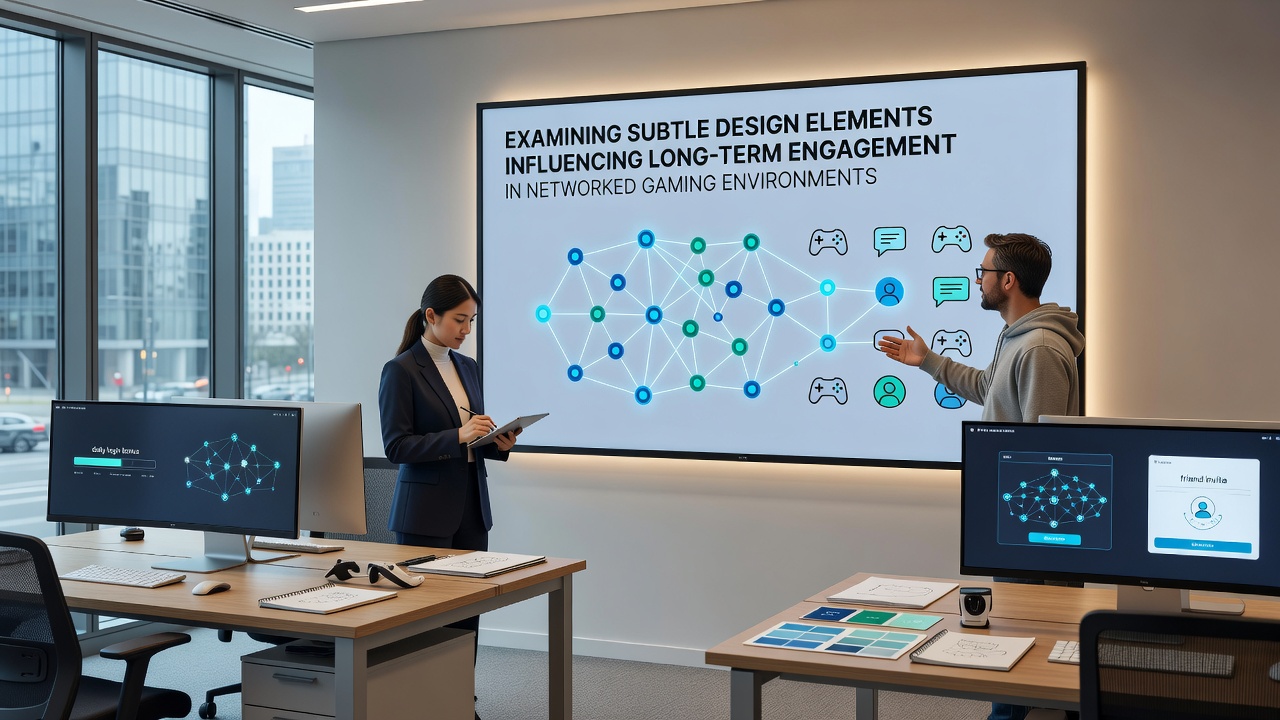
Further examination of these social layers shows integration with external calendars and cross-platform notifications that align with real-world schedules rather than game time alone. Developers have tested versions that surface upcoming group events only when participants have been absent for a set threshold, and results indicate improved retention without triggering notification fatigue. Such calibration draws from behavioral datasets that span multiple regions, allowing the mechanics to respect cultural differences in play patterns while still promoting continuity.
Environmental Responsiveness and Adaptive Worlds
Game spaces that react to collective player actions create a sense of living continuity, and evidence from server analytics demonstrates this responsiveness correlates with longer subscription lifespans. When world states shift based on aggregated choices yet remain traceable to individual contributions, participants perceive impact without needing explicit leaderboards. Observers have recorded how these changes manifest through weather systems, resource availability, or NPC behaviors that evolve gradually, rewarding consistent presence with evolving scenery rather than sudden resets. Reports compiled in late 2026 by academic teams in Asia and North America confirm that titles employing such adaptive layers experienced steadier daily active user counts compared with static environments that relied primarily on new content drops.
Conclusion
Collectively these understated components form an interconnected system where each element reinforces the others, and aggregated figures from regulatory and academic sources continue to map their combined influence on retention. As networked gaming expands, the focus on these internal architectures rather than surface-level additions provides clearer pathways for understanding what sustains participation across diverse player bases.