Decoding Layered Systems in Algorithmically Crafted Gaming Realms
Logan Klein · Nov 4, 2026
Decoding Layered Systems in Algorithmically Crafted Gaming Realms
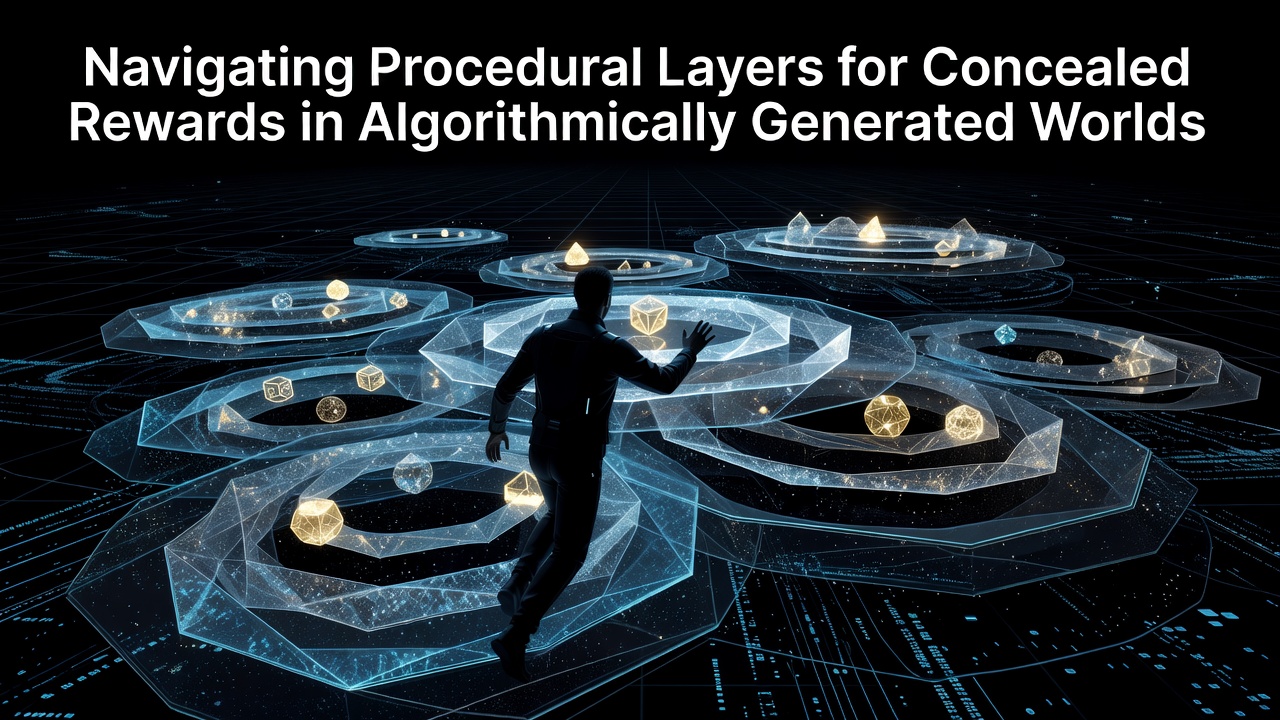
Algorithmically generated worlds rely on procedural layers that stack rules for terrain, resources, and events, and players must decode these layers to locate concealed rewards such as rare artifacts or hidden caches. Developers seed initial parameters that dictate how each layer interacts with the next, which creates emergent structures where surface features mask deeper systems. Research indicates that games employing this method often generate millions of unique configurations from a single seed value, allowing repeated playthroughs to yield different navigation challenges.
Those who've studied this process note that early layers handle broad geography while subsequent layers refine details like resource distribution and enemy placement, and the interaction between these layers determines reward visibility. Data from industry reports shows that successful navigation requires players to map patterns across multiple depth levels rather than relying on fixed coordinates. Experts have observed that tools such as noise functions and cellular automata form the backbone of these layers, which means players benefit from recognizing recurring mathematical signatures in the environment.
Core Mechanics of Procedural Layer Construction
Layer construction begins with base noise maps that establish elevation and biome boundaries, after which additional passes add vegetation, structures, and item spawns that can remain hidden until specific conditions align. According to findings from the Entertainment Software Association, procedural techniques have appeared in over 60 percent of open-world titles released between 2020 and 2025, which demonstrates their growing prevalence in the sector. Players frequently discover that altering one layer variable, such as temperature gradients, cascades changes through deeper reward layers and shifts item locations without altering the overall map seed.
Observers note that many systems incorporate recursive layering where a higher-level function calls lower-level generators, and this recursion produces concealed sub-regions that only activate under precise player actions. Studies from research institutions have shown that such recursion increases computational efficiency while expanding possible reward configurations exponentially. The reality is that players who track these recursive calls through in-game data logs often gain an advantage in predicting where rewards cluster.
Player Navigation Strategies Across Depth Levels
Effective navigation starts with surface scanning that identifies anomalies hinting at deeper layers, and these anomalies include unusual terrain folds or vegetation patterns that deviate from expected noise outputs. Players then descend through layers by fulfilling implicit triggers such as collecting specific resources that unlock subsequent generation passes. Figures from academic analyses reveal that experienced navigators spend roughly 40 percent of their session time testing environmental interactions rather than moving toward visible objectives.

Yet the process does not end at discovery because retrieving a reward often requires backtracking through layers that have since shifted due to dynamic regeneration rules. One study revealed that dynamic updates in November 2026 introduced new layer stability parameters in several major titles, which reduced unintended reward duplication while preserving exploration depth. Those who've examined these updates report that the changes encourage methodical layer mapping instead of rapid traversal.
Case Examples from Established Game Titles
Take one title that uses layered generation for underground cave systems where surface biomes influence mineral distribution at depth, and players who correlate surface flora with subsurface yields locate concealed mineral nodes more efficiently. Another example involves space exploration games that nest stellar, planetary, and atmospheric layers, each containing its own reward tiers that activate only after the player satisfies conditions from the layer above. Researchers discovered that documentation communities compile seed-specific layer diagrams that allow others to replicate successful navigation paths across multiple sessions.
What's significant is that these communities often publish open datasets showing how layer interactions produce statistically rare rewards, and such datasets help new players understand the underlying algorithms without direct code access. The ball remains in the developer's court regarding transparency because many studios release partial generation logs while withholding full layer specifications.
Technical Tools and Analytical Approaches
Analytical tools range from simple coordinate logging to advanced visualization software that renders multiple layers simultaneously, and players who adopt these tools report faster identification of reward clusters. Industry organizations such as the Interactive Games and Digital Association have funded projects examining how procedural layering affects player retention metrics, with results indicating sustained engagement when concealed rewards follow predictable yet non-obvious layer patterns. External references from university-led research further detail mathematical models that predict reward probability across layered systems.
But here's the thing: not every player needs external software because in-game sensors and mapping functions often expose enough data to infer deeper layer states. Those who combine in-game telemetry with external analysis gain the most comprehensive view of how rewards remain concealed until navigation sequences complete.
Conclusion
Procedural layering continues to shape how algorithmically generated worlds distribute concealed rewards, and understanding the stacked mechanics allows players to navigate these systems with greater precision. Data shows that ongoing refinements in generation parameters, including those scheduled around November 2026, will likely deepen the complexity of these layers while maintaining accessibility for methodical explorers. Observers note that the field remains dynamic as developers balance computational demands against the desire for expansive, reward-rich environments.